
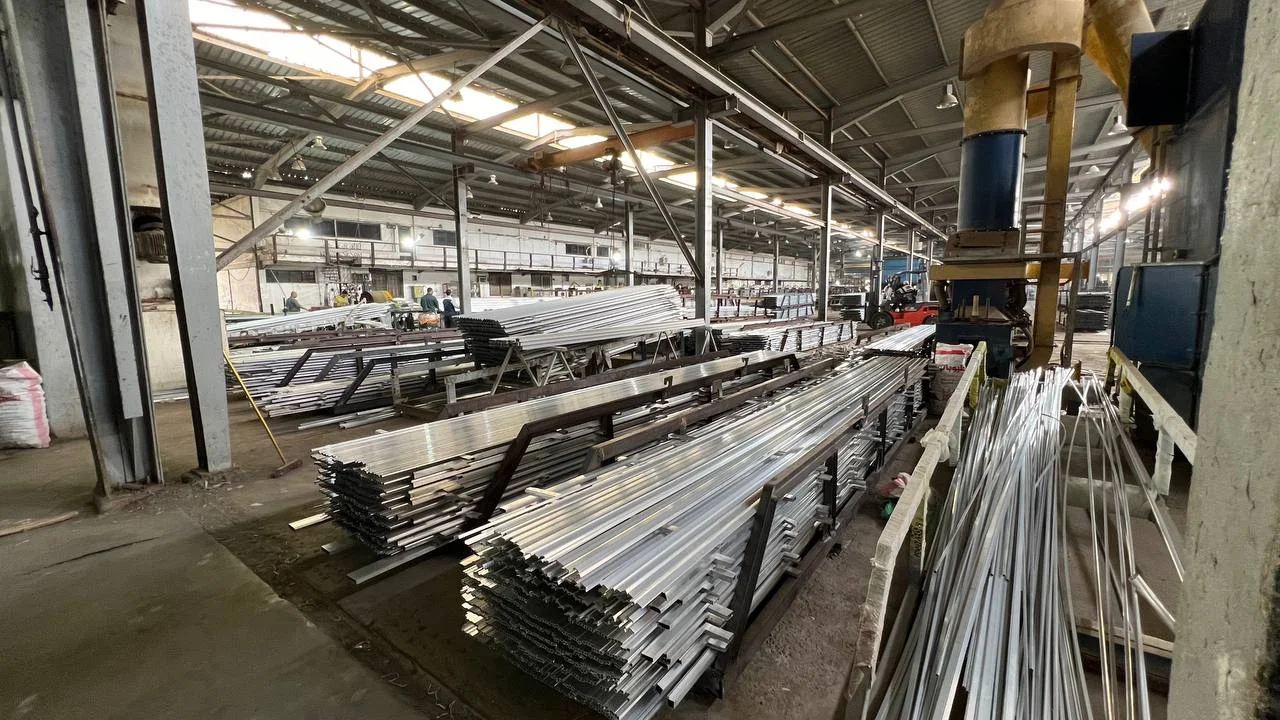
witnessed Aluminum Industry in Egypt An unprecedented period of transformation. Between capacity expansions, growth in the real estate sector, and economic challenges posed by the energy crisis and exchange rate fluctuations, the sector is at a crossroads that will determine its future for the next decade. In this article, we explore the Egyptian market by the numbers, the drivers of growth, the real challenges, and the opportunities in 2026 and beyond.
The Egyptian Market by the Numbers
Egypt is one of the largest producers and consumers of aluminum in the Middle East and Africa. The local market consumes approximately 400-500 thousand tons per year of aluminum profiles, distributed in the following sectors:
- The construction industry: Accounts for about 60-65% of consumption (windows, doors, facades, wall curtains)
- Manufacturing industries: 15-20% (furniture, lighting, appliances)
- Industrial sector: 10-15% (Chassis, Tires, Transportation Systems)
- other sectors: 5-10% (Automotive, Electronics, Solar)
The Egyptian market also absorbs part of the production of Egyptian factories destined for export to neighboring countries in the Middle East and Africa, especially Libya, Sudan, Iraq, and the Gulf states.
Catalysts for growth in 2026 and beyond
1. The real estate boom and new cities
Megaprojects such as the New Administrative Capital, New Alamein, and fourth-generation cities consume massive amounts of aluminum profiles. Each modern housing unit requires 80-150 kg of aluminum on average, and with the country's plans to build millions of units in the coming years, this translates into decades of demand.
2. Market Orientation to Quality
The Egyptian consumer has become more aware of the importance of quality. Shoddy windows and doors are no longer acceptable, especially in medium and luxury projects. This trend opens the way for manufacturers who adhere to international standards (ISO 9001) and Egyptian quality certificates.
3. Growing exports to Africa
African Free Trade Agreements (AfCFTA) open up a market of 1.3 billion people to Egyptian manufacturers. Egypt's geographic location, industrial expertise, and competitiveness make it a natural gateway to supply processed aluminum to African markets.
4. Solar Energy and Sustainability
As the world shifts towards renewable energy, the demand for aluminum profiles for solar mounting systems is on the rise. Egypt, with its abundant solar radiation, is poised to become a regional solar energy hub, creating a sustainable demand.
5. Green construction
The adoption of LEED and EDGE standards in large-scale projects is driving the use of aluminum, due to its full recyclability and energy efficiency in insulating buildings through Thermal Break.
Real challenges for the sector
1. The energy crisis and production costs
The aluminum industry is one of the most energy-intensive industries. Rising energy prices in Egypt - especially after economic reforms - are squeezing profit margins and challenging manufacturers to improve production efficiency.
2. Pellet price fluctuations
Pellet prices are linked to the International Metal Exchange (LME), making production planning difficult. Exchange rate fluctuations compound these risks and require companies to have sophisticated hedging strategies.
3. Competition from imports
The local industry faces competition from imported profiles, especially from Turkey and China, which enter the market at sometimes low prices. Maintaining quality and building a strong brand has become a necessity rather than an option.
4. Lack of technical skills
The sector needs engineers and technicians trained in the latest drag, anodizing, and surface treatment technologies. The gap between technical education outputs and industry needs remains.
5. Increasing environmental regulations
Environmental legislation in Egypt is rapidly evolving, imposing additional obligations on manufacturers in waste management, factory emissions, and energy efficiency. Those who do not invest in sustainability will face increasing operational challenges.
Opportunities for 2026
- Expanding into specialized production: Technical profiles for the industrial sector (automotive, solar, electronics) achieve higher profit margins than standard architectural profiles
- Vertical integration: Owning in-house asphalt and surface treatment plants improves quality and reduces costs
- Invest in recycling: Scrap aluminum saves 95% of primary production capacity - Investment in recycling lines reduces costs and promotes sustainability
- Digital transformation: ERP and IoT systems in production lines improve efficiency and minimize waste
- Direct export: Building relationships with distributors in the African and Gulf markets rather than relying on middlemen
Allomat's role in this future
At Alumat, we are preparing ourselves for the future of Egypt's aluminum industry with an integrated approach:
- Expanding production capacity: Fourth state-of-the-art production line to be launched in Q4 2026, bringing our capacity to 14,000 tons per year
- Adherence to international standards: Our three certifications (ISO 9001:2015, ISO 14001:2015 and ISO 45001:2018) ensure quality, sustainability and safety
- Industrial integration: In-house drum factory, advanced anodizing and painting lines, and a specialized engineering team - all under one roof
- Focus on the customer: From small projects to large orders, we provide the same level of quality and attention
- Regionalization: Strengthening our partnerships with major factories in Arab countries and opening new markets in Africa
Conclusion
The future of Egypt's aluminum industry is full of opportunity for those who prepare diligently. The challenges are real - from energy costs to foreign competition - but the drivers are stronger: A real estate boom, African exports, environmental transformation, and a more quality-conscious consumer.
The companies that will win in this era are those that combine quality, sustainability, operational efficiency, and the ability to understand changing customer needs. At Alumat, we believe the future of aluminum in Egypt is bright, and we work every day to be a part of that future.
 Arabic
  English
  German