
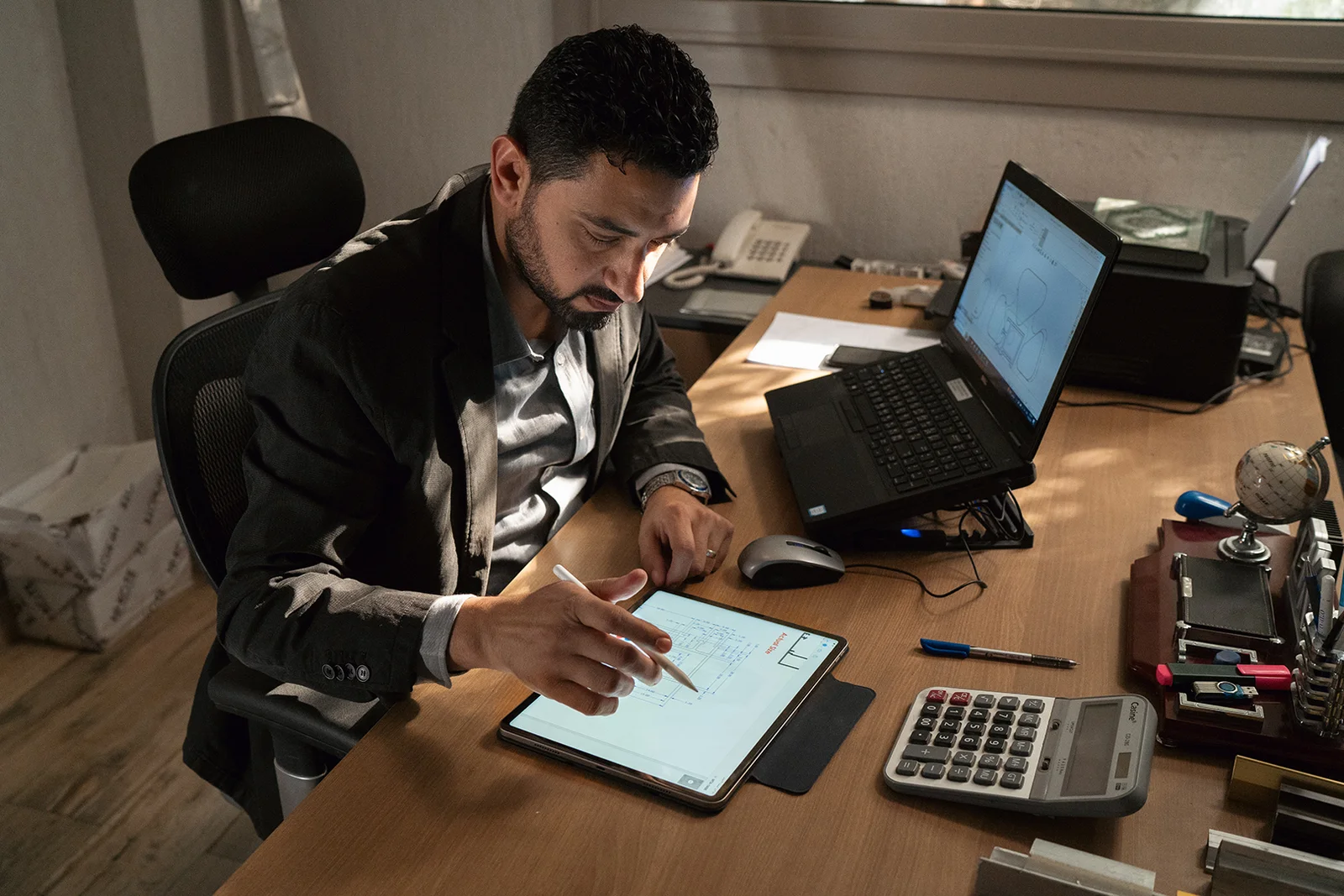
Choosing Aluminum profile The right choice is not just a technical decision, but a strategic one that affects the quality, cost, and lifespan of a project. Whether you're a contractor, designer, or engineer, understanding the key factors in choosing a profile ensures an optimal combination of performance and economy.
Why does the choice of profile determine the success of a project?
The wrong profile means one of three things: Either cost overruns with specifications that are too high, poor performance that jeopardizes the integrity of the project, or poor finishing that affects the final look. In contrast, the right profile strikes the perfect balance between strength, appearance, cost, and application requirements.
The Six Factors for Choosing an Aluminum Profile
1. Project Type and Usage
Is the project architectural (windows, doors, facades), industrial (machine structures, frames), or private (LED lighting, furniture)? Each application imposes completely different requirements. For example, the windows of residential buildings are radically different from the facades of commercial towers in terms of structural and thermal insulation requirements.
2. Mechanical requirements
Carefully determine the required tensile strength, bending resistance, and load tolerance. Simple architectural profiles may not need strict specifications, while structural profiles in high-rise construction projects require alloys with specific specifications such as 6005 or 6061.
3. Surrounding environment
Will the profile be exposed to high humidity, a salty marine environment, or direct sunlight all day long? Coastal areas need additional surface treatment to resist corrosion, and sun-exposed facades need UV-tolerant finishes.
4. Surface treatment required
Do you need a natural metallic look (anodizing) or a specific color that matches the project's identity (electrostatic painting)? Each option has its own benefits and costs. Anodizing is more durable in harsh environments, and painting offers more color flexibility.
5. Suitable alloy
Alloy 6063 is most common in architectural applications for its ease of drawing and good finish. Alloy 6005 provides higher strength with formability. Alloy 6061 is used in high strength applications such as structural steel. Alloy selection should come before the design of the profile.
6. Cost and availability
Standard profiles are cheaper and quicker to provide, while customized profiles require the fabrication of special barrels and additional cost. For larger projects, a customized design may be more economical in the long run.
Common types of profiles in the Egyptian market
The aluminum profiles market in Egypt includes a wide variety of standard shapes:
- Angles: For structures, frames and finishes
- Pipes and pipes: For stairs, light construction, water systems
- Rectangles and Box Sections: For Structures and Tires
- Bars and flats: For various applications
- Window and door profiles: Customized off-the-shelf systems
- Curtain Wall: For commercial buildings and high-rise structures
- Custom shapes: Customized with special cylinders
Tips from Aluminate Experts
Start with practice, not form: Know what the profile should do before you choose what it looks like. Many projects fail because the choice started from appearance rather than function.
Don't compromise the alloy to save money: The difference between an ordinary alloy and a proper alloy may be a few pounds, but the difference in performance and lifespan is huge.
Ask for quality certificates: Make sure the supplier is at least ISO 9001 certified and that the product complies with Egyptian or international standards.
See the nature of asthma: Worn-out drums produce profiles with inaccurate sizes, causing subsequent installation issues.
Conclusion
Choosing the right aluminum profile requires a clear understanding of the application, environment, and technical parameters required. The more thorough the selection is based on a careful consideration of these factors, the more qualitative and economical the end result will be.
At Alumat, we offer a wide range of standard and custom profiles with a production capacity of 14,000 tons per year, supported by three state-of-the-art production lines and a dedicated engineering team to help you choose the perfect solution for your project.
 Arabic
  English
  German